

Mexico Taught Me Who I Am
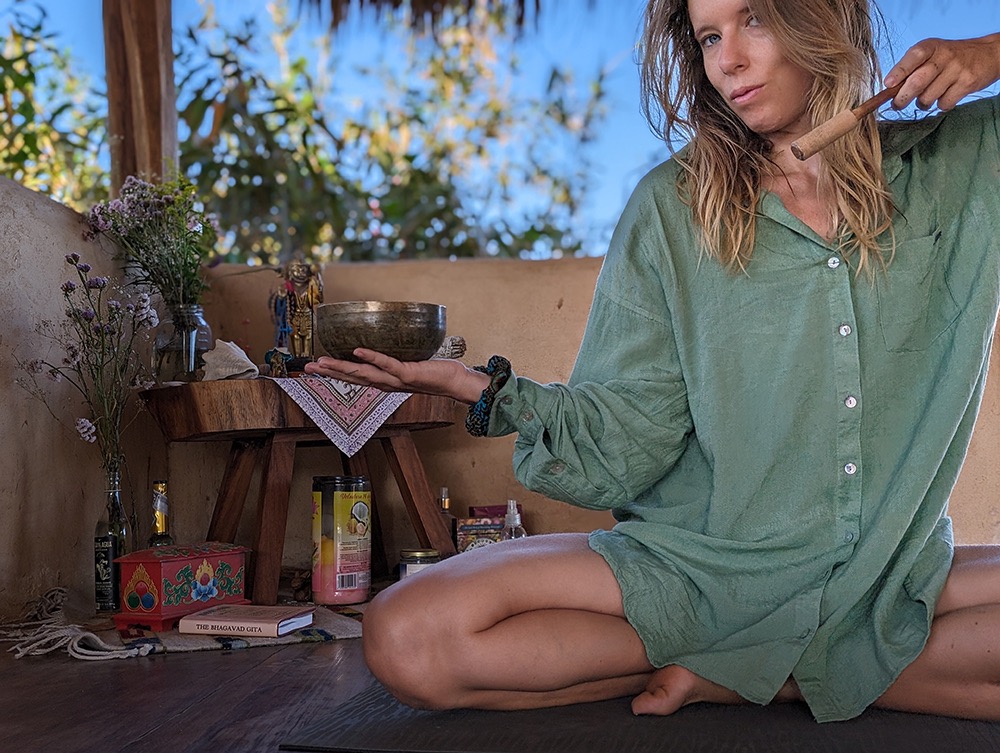
Cara Shanti came to Puerto Escondido for the surf. Seven years later, she is still here….and entirely different.
Cara Shanti was only supposed to stay for six months.
She had been backpacking for four years (Asia, Australia, New Zealand), living out of a pack, constantly moving, the way long-term travelers do when momentum becomes its own kind of home. She and her partner were ready for something different. A friend recommended Puerto Escondido. She was into surf at the time. Mexico had always held a particular fascination for her; its ancient history, its culture, something she couldn’t quite name that had kept it at the top of her list.
Six months turned into seven years.
The reason she stayed, at first, was COVID. Like so many people in Puerto during that period, she got caught. But what she witnessed from a distance — her friends there, still living, still building community, still choosing each other while the rest of the world went quiet — made her want to come back. And when she did, she understood something.
“It felt like I came back home, where I belong,” she says. “And it always feels like that when I come back to Puerto after traveling.”
“Mexico taught me who I am and why I am here for.”
What Puerto Did To Her
Cara Shanti was not a yoga teacher when she arrived. She was practicing occasionally, the way many people do — something to do, something that felt good, not yet a vocation. Puerto Escondido changed that. She doesn’t dramatize it; she simply says the place and the people she found there kickstarted something that had always been waiting.
She trained in India. She practiced in Europe. But it was in Mexico that the deeper practice took hold, and where she began to understand why.
What intrigues her most about Mexican wellness culture, she says, is the way ancient indigenous knowledge resonates with the philosophy of yoga. The Toltec concept of the Mitote — the chaos and confusion of the mind, the noise of accumulated beliefs, judgments, and fears that masquerade as identity — maps almost precisely onto what yoga calls the ego. She speaks about this in her classes. It is not a forced parallel. It is a genuine convergence.
She finds the same thread running through cacao ceremonies: a sacred plant practice from Mesoamerican tradition that functions, in her experience, as a heart-opening ritual — a way to connect with what yoga calls the Anahata chakra, with community, with shared intention. The form is different. The invitation is the same.
But cacao is not the only plant that has shaped her path. Cara speaks openly about her experience with psilocybin — her first encounter was in San José del Pacífico, a mountain village about three hours from Puerto Escondido long known for its relationship with sacred mushrooms. She describes the experience as deeply transformative: a reconnection with what she calls ‘god, or just life itself.’ It shifted the way she sees the world. It shifted the way she teaches.
‘Of course,’ she is careful to say, ‘these things need to be handled with a lot of care.’ She does not romanticize or prescribe. She simply honors what the experience gave her — and integrates it, as she does everything, into a practice built on deep respect for the body, the mind, and the traditions she draws from. *
“Both cultures tell us not only to take care of our body, but our mind, our community, our earth,” she says.
What the Western World Often Misses

Cara has practiced yoga in France, and the contrast with what she experiences in Puerto Escondido is not subtle.
In some European studios, she says, yoga often means asana, the physical postures, and little else. The deeper dimensions of the practice, the breathwork, the philosophy, the devotional elements, are frequently absent or actively unwelcome. She describes a conversation with a friend who teaches yoga in France: a teacher who had stopped singing mantras in class, even a simple OM, because students weren’t responding. Mantras are just not a thing in some cultures, even though they’re a traditional and integral part of yoga.
“It’s true that when I take a yoga class in France, I rarely hear an OM being sung during the practice,” Cara says, without judgment, but with clarity about what that absence means.
Mexico, by contrast, is open to the energetic, the ancestral, the spiritual. There is an instinctual respect for what lies beneath the surface of the body. Cara finds this not just culturally interesting but professionally essential. The work she does cannot be done without it.
“Wellness is not something to achieve. It is something we continuously come back into relationship with.”
The Work She Does
Cara’s practice is layered. She teaches private yoga classes. She facilitates cacao rituals and private ceremonies. And she offers somatic therapy, a form of body-based healing that treats the physical experience of holding, bracing, and disconnection as the entry point for deeper psychological and emotional integration.
The offering she is most known for, and most moved by, is what she calls the Rite of Passage.
Rites of passage have existed across cultures for centuries because they do something that ordinary time cannot: they mark a threshold. They make visible the invisible line between who someone was and who they are becoming. Cara has built a practice around this recognition. She works with people who are grieving; the death of a parent, the end of a relationship, the collapse of a version of themselves they had outgrown. People who are ready to let go of something but need guidance and witness for the crossing.
“A lot of people who come to Puerto are not simply here on holiday,” she says. “They have something they want to release. They feel ready to take the next step, but they need support through the process of letting go.”
A somatic therapy session with Cara Shanti is not a single appointment. It is a process (usually three sessions) that begins with understanding the person’s story and rebuilding the bridge between mind, body, and soul before any deeper work can happen. A private ceremony is different: one long, carefully tailored session, shaped entirely around the specific transition the person is moving through.
The results she sees most often are not dramatic breakthroughs in the room. They are quieter: a door opening. A person feeling more aligned. And then, often, a deepening — a sense that something has shifted and that the path is now pointing somewhere new.
Two of the people she worked with became yoga teachers. Neither had planned it. Both reached out afterward to tell her something in their session had moved something in them.
“When a person who has been completely disconnected from their body suddenly finds that connection again, something magical happens.”
How She Holds It All Together
Cara is currently studying psychology, not to become a clinical psychologist, but to build a stronger foundation beneath her existing practice. She cites Carl Jung as a particular influence this year. His framework, she says, sits close to her own vision: the unconscious not as something to be feared or suppressed but as territory to be explored with care and curiosity.
Her personal philosophy is that wellness is not a destination. It is a relationship — one we keep returning to, across different seasons of life, with varying degrees of ease.
Her own practice reflects this. She used to hold herself to a strict daily yoga routine, and the gap between the ideal and the reality left her feeling frustrated. Then a teacher friend told her something that reset her thinking: “If yoga feels like homework, you’re not doing yoga.” Now she has a simple 30 to 40 minute practice — kriyas, breathwork, meditation, and asanas chosen for her specific needs — that she returns to most days. Some days longer. Some days not at all. Either way, fine.
There is no right or wrong path, she says, as long as your heart is happy. She means this as a philosophical principle. But she also means it literally.
A Perfect Day in Puerto
Ask Cara what a perfect day looks like and she answers without hesitation.
Surf in the morning, after her short yoga practice. Coffee at Ojitos Abiertos in La Punta, a place she says has a special vibe, the kind that’s hard to explain but immediately recognizable when you’re in it. A good lunch. Work in the afternoon. And then sunset yoga at La Hojita, which she describes simply as the most beautiful spot in Puerto. Dinner with friends to close it.
It is a day that moves between solitude and community, between practice and pleasure, between the body’s needs and the soul’s. Which is, perhaps, exactly what she teaches.
She has been in Puerto Escondido for seven years. The backpack is long gone. She is not leaving.
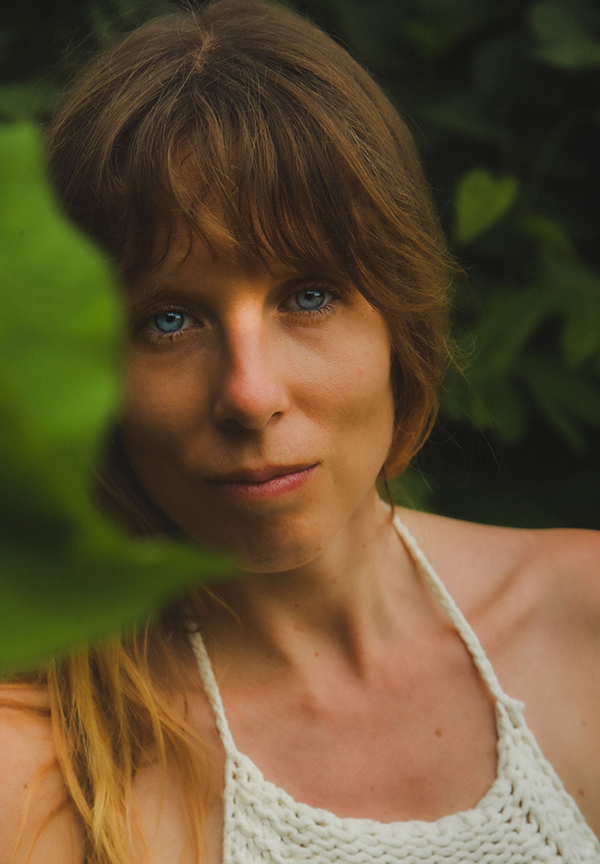
Cara Shanti is a yoga teacher, somatic therapist, and ceremony facilitator based in Puerto Escondido. She offers private yoga classes, somatic therapy sessions, cacao rituals, and bespoke Rite of Passage ceremonies for people navigating grief, transition, and transformation.
Find Cara Shanti on the EnForma Wellness platform and book a session or ceremony through the EnForma app.
EnForma was born in Mexico. Not inspired by it, not transplanted here — born here, in the salt air and slow mornings and something harder to name that this country does to the people who stay. Raíces is our way of introducing you to the people who know that feeling best: the practitioners who came to Mexico and never left, who built their practices here, who found in this land a deeper expression of the work they were already called to do. Each post in this series is a conversation — about healing, about Mexico, about what it means to root yourself somewhere and let that place change you.
* Disclaimer
EnForma Wellness supports open, honest conversations about the full spectrum of healing modalities. The experiences shared in this post are personal reflections of the practitioner and do not constitute a recommendation or endorsement by EnForma Wellness. Plant medicines such as psilocybin may be subject to legal restrictions depending on your location. EnForma Wellness encourages all individuals to research the legal status in their region, consult qualified professionals, and approach any such practice with appropriate care, intention, and guidance.

